
Focus Points
- Addictions aren’t limited to alcohol or drugs, everyday habits like coffee, sugar, and screen time can also create hidden dependencies.
- Caffeine is the world’s most consumed psychoactive substance, and excessive use can lead to anxiety, insomnia, and withdrawal symptoms.
- Sugar activates the brain’s reward system like drugs, driving cravings and contributing to obesity, diabetes, and heart problems.
- Hidden addictions such as internet use, shopping, or over-exercising are socially accepted but can harm health and relationships if unchecked.
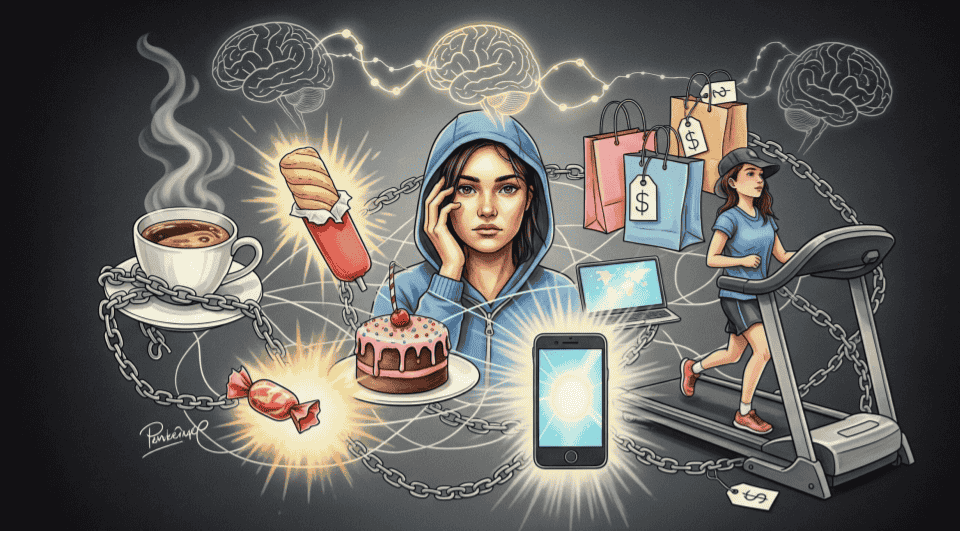
When we hear the word addiction, our minds often jump to substances like alcohol, nicotine, or drugs. But what about that morning coffee you “can’t live without,” or the late-night craving for something sweet? These everyday habits may seem harmless, but they reveal a truth we often overlook: some of the most common addictions are hiding in plain sight. They quietly foster dependency while remaining so common and socially accepted that we rarely question them.
Caffeine, found in coffee, tea, energy drinks, and sodas, is the world’s most widely consumed psychoactive substance which has the potential to alter brain function, affecting psychological processes like perception, mood, and consciousness. While moderate use can boost alertness, excessive dependence can cause anxiety, insomnia, headaches, and withdrawal symptoms. Many people struggle to function without their daily fix, a sign of physiological reliance that often goes unrecognized. The dependence feels so normal that it is rarely questioned.
Sugar is another overlooked addictive substance. It stimulates the brain’s reward system in ways similar to drugs, creating cycles of craving and overconsumption. That slice of cake or candy bar doesn’t just taste good, it activates the brain’s reward pathways, leaving us wanting more. Over time, high sugar intake contributes to obesity, diabetes, and cardiovascular issues. Despite this, sugary foods are deeply embedded in culture, making regulation and moderation difficult.
Beyond caffeine and sugar, other hidden addictions include compulsive internet use, shopping, and even over-exercising. These behaviours provide short-term pleasure or relief but can spiral into habits that disrupt health, relationships, and productivity.
The tricky part is that these addictions are socially acceptable, sometimes even encouraged. They may not carry the same stigma or immediate dangers as hard drugs, but their long-term effects can be just as damaging. Recognizing them is the first step. Small changes, such as cutting back on caffeine, swapping sugary snacks for healthier options, or setting boundaries on screen time, can make a big difference in breaking free from these subtle dependencies.