
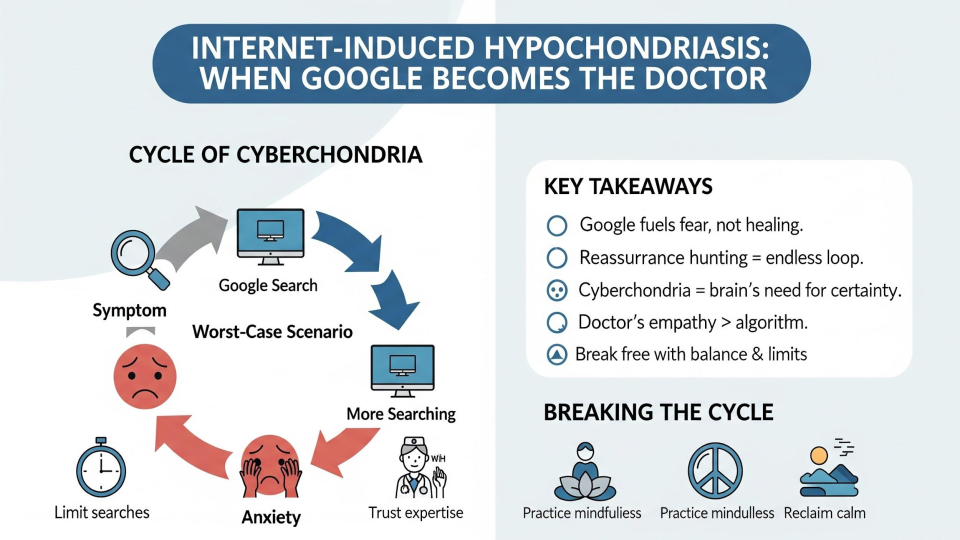
Key Takeaways
- When symptoms meet search bars, anxiety multiplies Google doesn’t heal, it often fuels fear.
- Reassurance hunting online isn’t clarity it’s a loop where every answer breeds more questions.
- Cyberchondria isn’t “overreacting,” it’s the brain’s plea for certainty in a sea of information overload.
- Behind every frantic search may lie loneliness, doubt, or the need for a trusted voice. A doctor’s empathy cuts deeper than any algorithm.
- Breaking free begins with balance, limiting searches, trusting expertise, and reclaiming calm over compulsion.
In today’s digital world, the internet is often the first place we turn to when something feels “off” with our health. A quick search of a headache might lead to pages warning about brain tumors. A stomach ache could spiral into fears of cancer. This modern phenomenon, known as cyberchondria, is essentially health anxiety amplified by the internet.
Cyberchondria extends the core features of hypochondriasis into the digital age. Patients often begin with mild, nonspecific symptoms and engage in repeated searches across health websites, forums, or social media. These searches frequently expose them to worst-case scenarios, leading to catastrophic misinterpretations of benign bodily sensations. Rather than alleviating concern, this repetitive checking behavior reinforces a cycle of doubt, heightened vigilance, and unnecessary medical consultations.
Several psychological mechanisms contribute to this phenomenon. The abundance of unfiltered information fosters information overload, impairing the ability to discern credible from misleading content. Cognitive biases, such as catastrophizing and confirmation bias, further exacerbate the tendency to assume the most severe diagnosis. Additionally, the temporary relief gained from online reassurance-seeking acts as a negative reinforcement, sustaining the compulsive behavior.
Psychologically, cyberchondria thrives on our need for control and certainty. The internet seems to offer answers, but in reality, it creates more confusion. What begins as a search for relief often results in heightened fear and compulsive re-checking of symptoms.
Breaking this cycle requires a balanced approach: recognizing that online searches are not diagnostic tools, practicing mindfulness to manage anxious thoughts, and consulting a trusted healthcare professional rather than endless websites. Setting healthy boundaries with internet use can help restore perspective and peace of mind.