

Key focus:
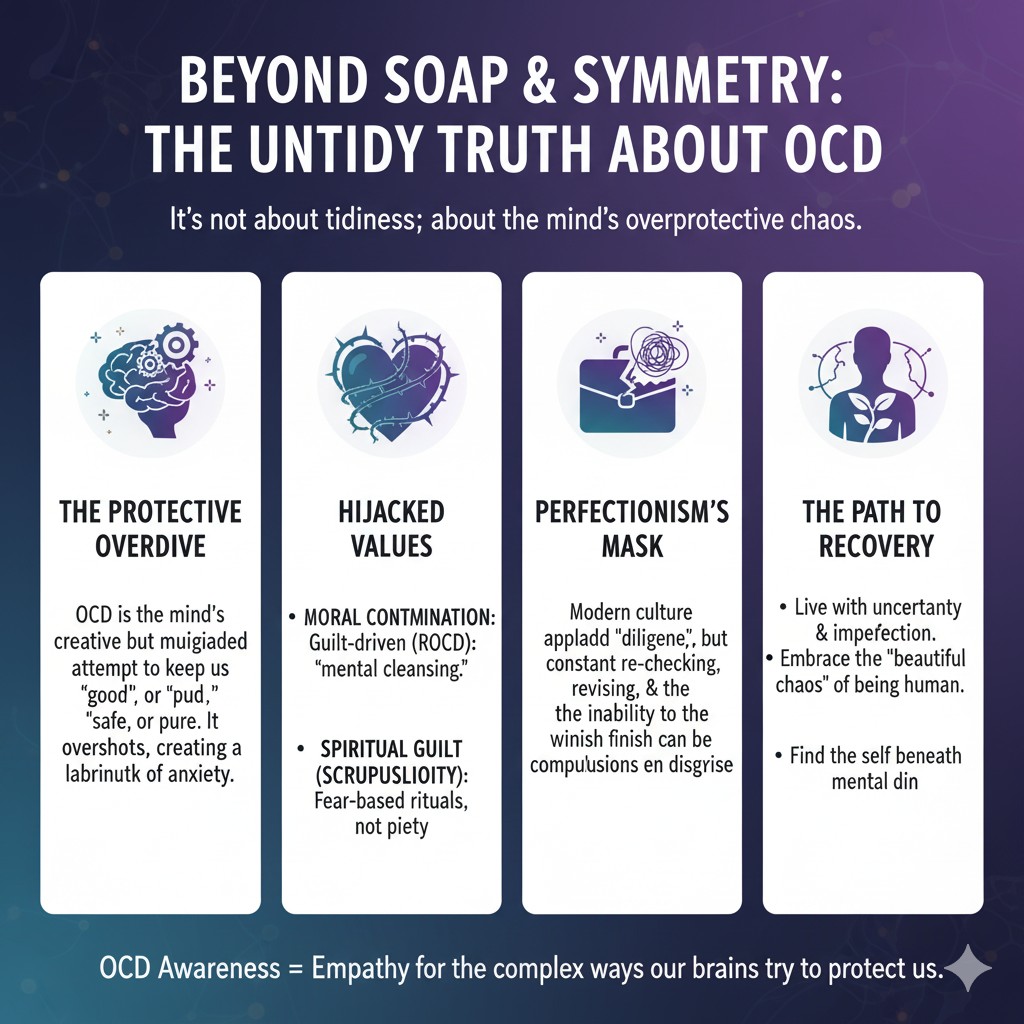
- 1. OCD isn’t just about soap and symmetry, it’s about the mind’s creative overachieving in trying to keep us “good,” “safe,” or “pure,” even when it overshoots spectacularly.
- 2. From moral contamination to relationship doubts and spiritual guilt, OCD finds new ways to hijack values and turn them into battlegrounds for reassurance.
- 3. Modern perfectionism often wears OCD’s mask, as productivity and “doing it right” quietly become compulsions in disguise.
- 4. True recovery isn’t about tidying thoughts but reclaiming identity, learning to live with uncertainty, imperfection, and the beautiful chaos of being human.
OCD has long been stereotyped into handwashing clichés and color-coded closet clichés. But the truth is much more complex and much messier. Below the comfortable surface is a labyrinth of emotional urges, moral anxieties, and identity crises that need a seat at the awareness table. Let’s lay off the stereotypes and take a look at what OCD actually looks like when it doesn’t travel with sanitizer.
Some people feel contaminated not by germs but by guilt. OCD isn’t about soap, it’s about scrubbing one’s conscience clean. A fleeting intrusive thought like “What if I’m a bad person?” can spiral into endless mental cleansing rituals, replaying conversations, seeking reassurance, or avoiding anything that might trigger shame. It’s not the hands they’re washing, it’s their self-worth.
And then, of course, there is Relationship OCD, or ROCD, the total romance buzzkill. It sends questions such as, “Do I actually love them?” or “What if they’re not the one?” and requires a never-ending stream of reassurance. Couples get stuck in a cycle of testing affection, dissecting emotions, and doubting every beat of the heart. Love is no longer about connection but about correction.
OCD can also be the bad guy in the head, leading individuals to believe they may lose control and injure others. Ironically, individuals who are plagued by these types of thoughts are the last that would take action. But they stay away from knives, drive with knuckle-whitened hands, and hyper-respond with over-responsibility, wearing themselves out in an attempt to demonstrate their safety.
In our perfectionist culture, perfectionism receives standing ovations but sometimes it’s OCD in a suit. The constant re-checking of messages, revising of reports, and failure to say something is good enough masquerades as diligence while fuelling compulsion.
Scrupulosity OCD introduces a religious spin- over-confession, ritual prayer, and moral checking motivated not by piety but by fear. In this case, faith becomes fear, and guilt disguises itself as holiness.
And when peace is finally regained, it’s not all victory. Others mourn the years lost to rituals, or the odd hollowness of existing without them. For recovering from OCD isn’t merely about soothing the mind, it’s about finding the self again beneath the din.
OCD awareness, therefore, is not about soap or symmetry. It’s about empathy for the messy, complicated, thoroughly human ways our brains attempt to protect us, even when they overcorrect.