
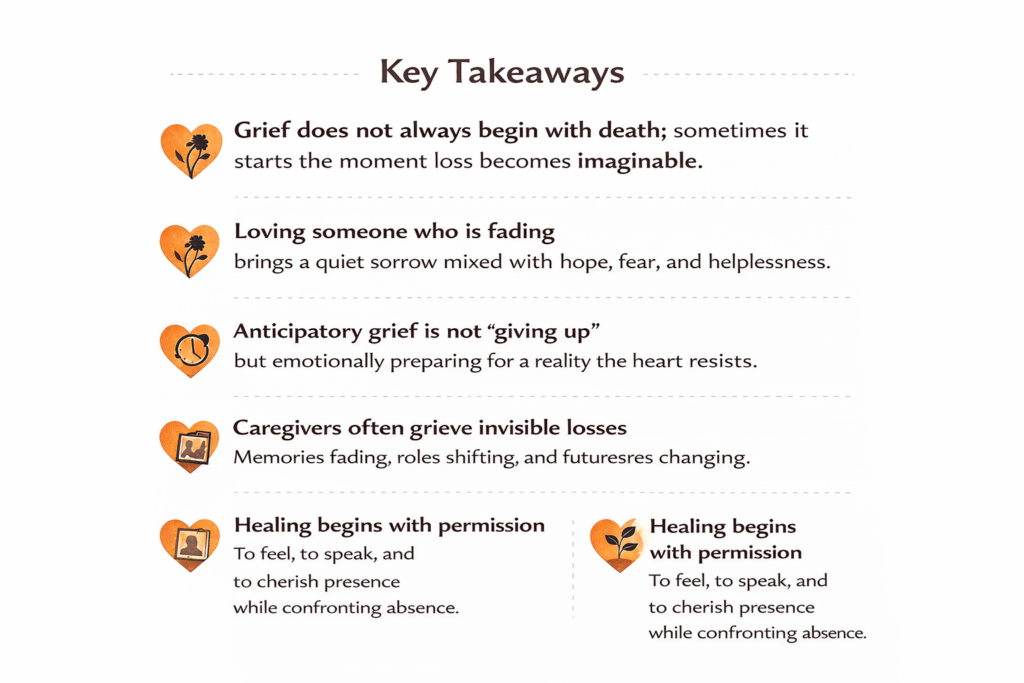
In life, grief is typically associated with loss that has already occurred. Yet for many individuals, grief begins long before the final goodbye. This experience, known as anticipatory grief, refers to the mourning that arises when a loss is expected but has not yet happened. It is commonly seen among caregivers, families of terminally ill individuals, and people facing progressive illnesses or life transitions.
Anticipatory grief is a complex emotional state where individuals live between presence and absence. A loved one may still be physically present, yet changes in health, personality, or independence create a sense of gradual loss. Family members may grieve the loss of shared plans, familiar roles, or the person they once knew, even while continuing daily caregiving responsibilities.
Psychologically, anticipatory grief reflects the human need to prepare for separation while maintaining attachment. The mind attempts to process reality in small fragments, grieving “micro-losses” such as declining communication, reduced mobility, or shifting family dynamics. Unlike post-loss grief, anticipatory grief unfolds gradually and repeatedly, making it emotionally draining and often unrecognized by others.
Several mechanisms intensify anticipatory grief. Uncertainty about timelines creates chronic stress, while ambiguous loss makes closure difficult. Caregiver burden can lead to burnout, social isolation, and suppressed emotional expression. Additionally, societal expectations to remain hopeful may invalidate grief that arises before death, leaving individuals feeling misunderstood or alone.
Despite its pain, anticipatory grief can also hold meaningful possibilities. It may create opportunities for emotional closure, forgiveness, and deeper connection. Families often engage in important conversations, express love more openly, and find meaning in caregiving. This process can support gradual adjustment, although it does not necessarily lessen the intensity of grief after the loss occurs.
Breaking the emotional isolation of anticipatory grief requires compassion and validation. Supportive counselling can help individuals express conflicting emotions without guilt. Mindfulness practices encourage presence in shared moments rather than fixation on future loss. Family communication fosters shared coping, while caregiver self-care protects emotional well-being. Most importantly, recognizing anticipatory grief as a natural response allows individuals to mourn without shame.
Anticipatory grief reminds us that love and loss are deeply intertwined. To grieve someone who is still present is to acknowledge the depth of connection and the fragility of time. By allowing space for both sorrow and presence, individuals can navigate this journey with tenderness, meaning, and emotional resilience.
#AnticipatoryGrief #CaregiverSupport #LossAndGrief #MentalHealth #TerminalIllness #MicroLosses #CaregiverBurnout #EmotionalWellbeing #BereavementSupport
Very good article regg Anticipatory grief before loss.