
- Different minds don’t need fixing they need spaces where they can function, express, and thrive.
- What looks like a struggle on the surface often holds a strength when understood with the right lens.
- The brain seeks safety, not sameness. Acceptance reduces distress more than pressure ever can.
- Inclusion is not adjustment for a few, but redesigning spaces where everyone naturally belongs.
- When we shift from “What’s wrong?” to “What works?”, we unlock confidence, potential, and growth.
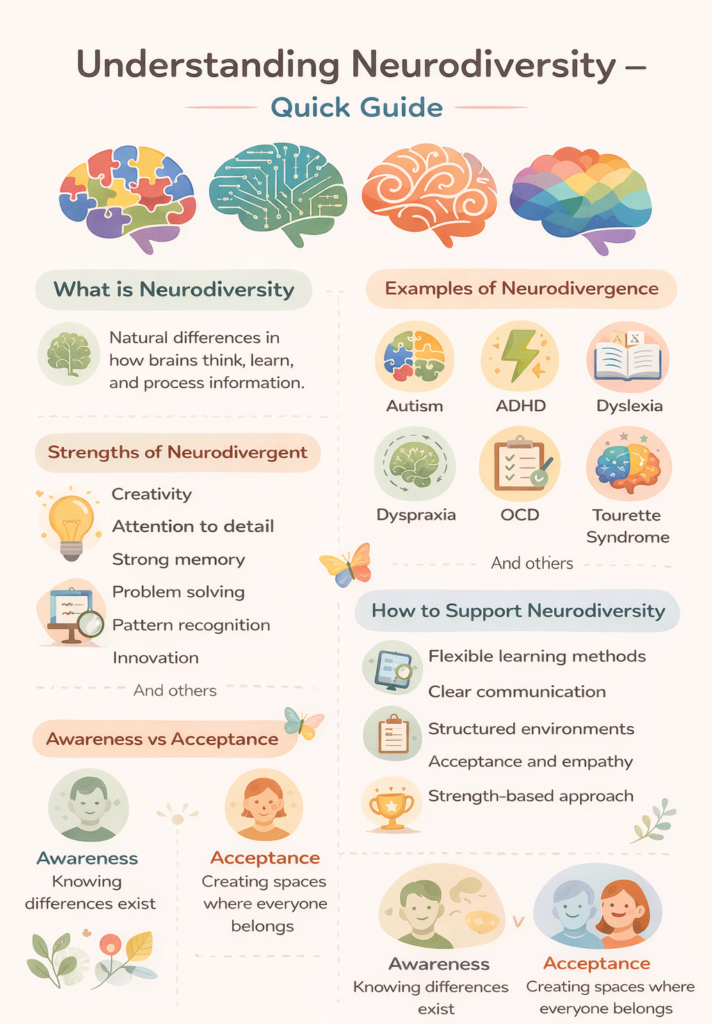
Neurodiversity Week is a global initiative that encourages us to recognize and respect the natural variations in how people think, learn, and experience the world. Neurodiversity includes conditions such as autism, ADHD, dyslexia, and others, and emphasizes that these are not deficits, but differences. This perspective shifts the focus from “fixing” individuals to understanding and supporting them in ways that help them thrive.
One of the most important ideas behind neurodiversity is acceptance over awareness. While awareness highlights that differences exist, acceptance goes a step further by creating environments where neurodivergent individuals feel valued and included. Many individuals grow up feeling misunderstood or pressured to conform, which can impact their confidence and mental health. Recognizing their strengths and validating their experiences plays a crucial role in building self-esteem and well-being.
A strength-based approach is central to neurodiversity. Individuals who are neurodivergent often possess unique abilities such as creativity, attention to detail, strong memory, or innovative problem-solving. When these strengths are acknowledged, individuals are more likely to succeed in academic, professional, and personal spaces. Rather than focusing only on challenges, this approach encourages a balanced understanding of both strengths and difficulties.
In education, neurodiversity calls for more inclusive teaching practices. Not all students learn the same way, and traditional systems may not cater to diverse learning needs. Flexible teaching methods, visual aids, hands-on activities, and individualized support can make a significant difference. When students feel understood, they are more engaged and motivated to learn.
Workplaces also benefit from embracing neurodiversity. Inclusive work environments that allow for different communication styles, structured tasks, and flexible working conditions can improve productivity and innovation. Organizations that support neurodivergent employees often see better problem-solving and creative outcomes, as diverse perspectives bring new ideas to the table.
Ultimately, neurodiversity reminds us that there is no single “normal” way to think or behave. Building an inclusive society requires empathy, openness, and a willingness to adapt. By valuing different ways of thinking, we create spaces where everyone has the opportunity to contribute meaningfully.