
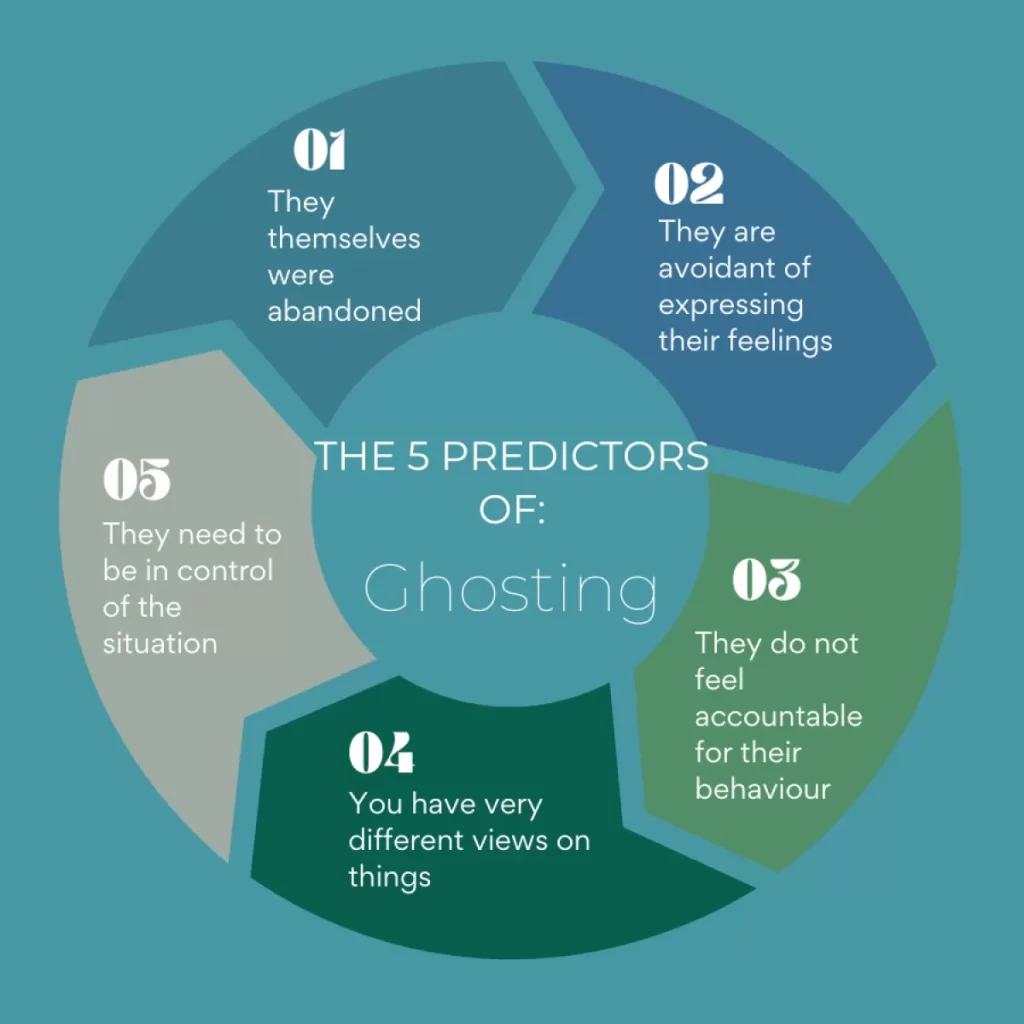
Ever sent a message and never got a reply? That empty silence, that unanswered text—it’s called ghosting. It’s more than just being ignored; it’s a form of emotional vanishing that can leave deep psychological marks. While ghosting might seem like a product of modern digital life, its roots go deeper into human behavior and emotional avoidance.
What Is Ghosting?
Ghosting happens when someone suddenly cuts off all communication—whether through texts, calls, or in person—without warning or explanation. The person left behind is often confused, hurt, and stuck wondering what went wrong (LeFebvre, 2017). The appeal of ghosting lies in its simplicity: it avoids uncomfortable conversations, emotional confrontation, and the effort required to offer closure. In our fast-paced, gratification-driven world, disappearing can seem like the easiest way out.
Why It Hurts So Much
Being ghosted doesn’t just bruise the ego—it can feel like real pain. Research shows that social rejection triggers the same areas in the brain as physical pain (Kross et al., 2011). That emotional cutoff can feel like whiplash, leaving the person ghosted spiraling with questions: Did I do something wrong? Was I not enough?
F. Scott Fitzgerald once wrote, “They slipped briskly into an intimacy from which they never recovered.” Ghosting often mirrors that sentiment: a flash of closeness, followed by abrupt silence. It’s the uncertainty—the lack of closure—that causes rumination, anxiety, and sometimes long-term issues with trust (Koessler et al., 2019).
Not Just Romantic
While ghosting is common in dating, it’s not limited to romantic relationships. Friends stop responding. Family members go quiet. You’re left on “seen,” birthdays are forgotten, calls go unreturned. In these cases, ghosting can echo the pain of emotional neglect or reawaken old wounds tied to attachment or self-worth.
What It Says—And What It Doesn’t
Here’s what’s important to remember: being ghosted doesn’t define your value. It reflects someone else’s inability—or unwillingness—to communicate with honesty. It’s about their discomfort, not your deficiencies.
How to Heal (or Leave) with Care
If you’re ending a relationship—whether romantic, platonic, or familial—do it with empathy. Closure doesn’t mean a dramatic confrontation; it means offering honesty and respect. And if you’ve been ghosted, know that healing starts with understanding it wasn’t your fault. Talk to someone you trust. Seek support. And remind yourself: the kind of connection you deserve is one built on clarity, care, and mutual respect.
References:
LeFebvre, L. E. (2017). Ghosting as a relationship dissolution strategy in the technological age. In Swipe Right for Love: The Impact of Social Media in Modern Romantic Relationships (pp. 219–236). https://doi.org/10.5040/9781978736375.ch-0014
Koessler, R. B., Kohut, T., & Campbell, L. (2019). When your Boo becomes a ghost: The association between breakup strategy and breakup role in experiences of relationship dissolution. Collabra: Psychology, 5(1). https://doi.org/10.1525/collabra.230
Kross, E., Berman, M. G., Mischel, W., Smith, E. E., & Wager, T. D. (2011). Social rejection shares somatosensory representations with physical pain. Proceedings of the National Academy of Sciences, 108(15), 6270–6275. https://doi.org/10.1073/pnas.1102693108