

Key Takeaways
- When the brain slips between dreaming and waking, hallucinations appear — not as dangerous, but as biology caught in transition.
- The figures, sounds, or sensations feel real because the dream world stays switched on even as consciousness returns.
- Sleep paralysis doesn’t mean helplessness — it’s the body’s safety mode lingering while the mind wakes up.
- Stress, exhaustion, and irregular sleep don’t just disrupt rest — they intensify these nighttime illusions.
- Most sleep-related hallucinations are harmless — understanding them dissolves fear and restores a sense of control.
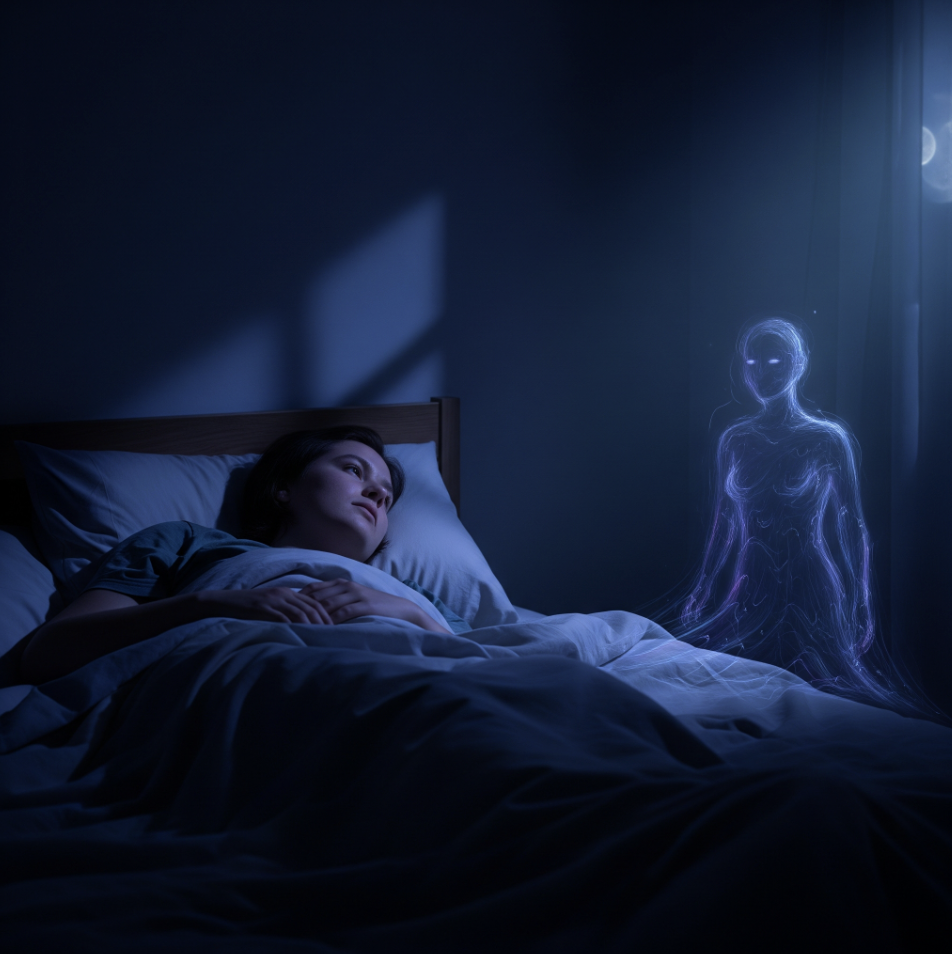
Sleep is supposed to be our mind’s nightly detox a time to reset, restore, and retreat into dreams. But for many people, that boundary between dreaming and waking isn’t always clear. Sometimes, the brain plays tricks. Shadows move, someone calls your name, a figure sits on your bed, or you feel a presence in the room. These vivid, often frightening experiences are called sleep-related hallucinations, and they are far more common than people realize.
Sleep-related hallucinations usually appear in two forms.
Hypnagogic hallucinations occur as you’re falling asleep your body is relaxing, but your brain is still firing. Hypnopompic hallucinations happen as you wake up your mind is surfacing, but the dream world hasn’t fully let go. In both cases, your senses are caught in a biological crossfade between sleep and wakefulness, leading to strikingly real visual, auditory, or tactile sensations.
People describe seeing insects crawling on walls, hearing footsteps, sensing someone standing near them, or even feeling like they’re floating outside their body. Unlike psychotic hallucinations, these episodes are linked purely to sleep transitions, not loss of touch with reality.
What makes them intense is sleep paralysis, which often occurs alongside hallucinations. The mind awakens before the body, leaving a person conscious but unable to move. In that moment, the brain may project dream imagery into the waking world, creating the classic “there’s something in the room” sensation.
Though terrifying, sleep-related hallucinations are usually harmless. Stress, irregular sleep schedules, anxiety, medications, or sleep deprivation can make them more frequent. For individuals with narcolepsy, they are especially common.
Understanding them removes much of the fear. These hallucinations don’t mean you’re “losing your mind” they mean your brain is blending two states of consciousness. With better sleep hygiene, regular routines, and stress management, most people see a dramatic reduction in episodes.
Sleep may blur the edges of reality now and then yet knowing what’s happening gives you back control.