
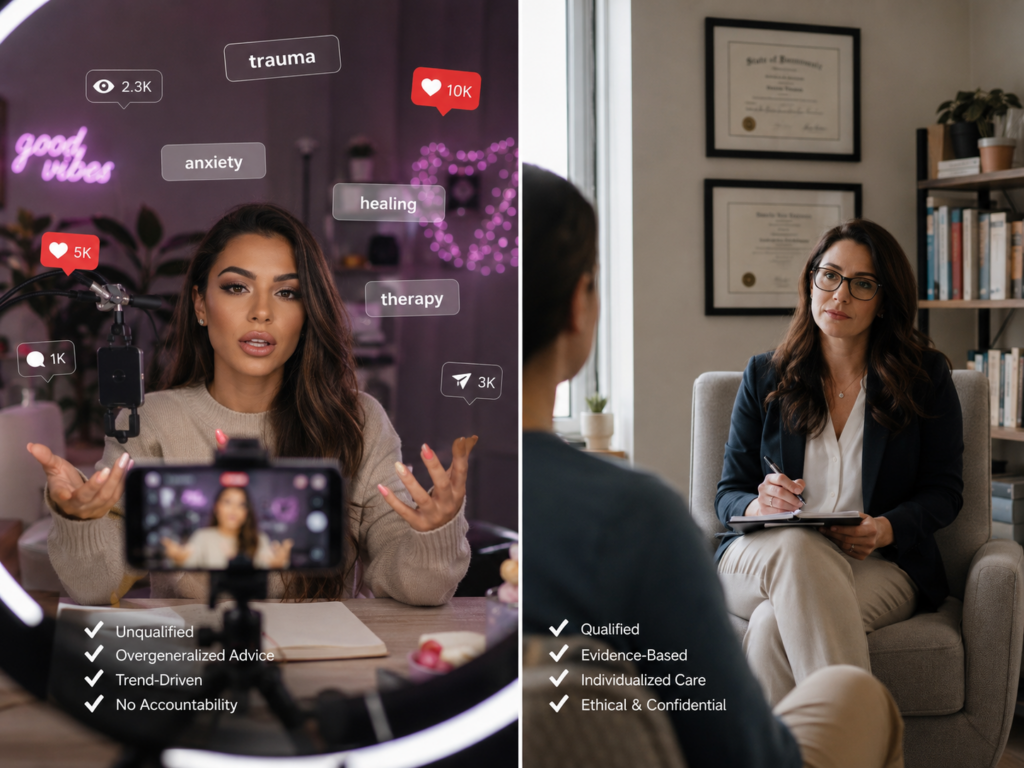
- In the age of reels, podcasts, and viral “therapy advice,” confidence is often mistaken for competence.
- Not all advice that feels comforting is clinically correct — misinformation can silently worsen emotional struggles.
- The internet has made psychological words common, but understanding mental health requires more than trendy labels and online quizzes.
- Real therapy is not about giving quick fixes, it is about creating a safe, evidence-based, and professionally guided healing space.
- In a world full of online “experts,” learning to question credentials is becoming just as important as seeking help itself.
In recent years, conversations around mental health have become more open and accessible. Social media platforms, podcasts, and online influencers have encouraged people to talk about anxiety, depression, trauma, and emotional struggles more freely than ever before. While this increased awareness is a positive step, it has also created space for a concerning issue, the rise of “pseudo psychologists.”
Pseudo-psychologists are individuals who present themselves as mental health experts without proper qualifications, training, or ethical responsibility. They may give psychological advice online, diagnose conditions casually, or offer “therapy” without understanding the seriousness of mental health care. Because they often speak confidently and use relatable language, many people trust them without questioning their credibility.
The danger lies in the impact this misinformation can have on vulnerable individuals. Mental health is not something that can be understood through a few internet posts or personal experiences alone. A trained psychologist spends years studying human behaviour, assessment techniques, ethics, and therapeutic approaches. Without this foundation, unqualified advice can lead to misdiagnosis, emotional harm, delayed treatment, or even worsening of symptoms.
At the same time, it is important to understand why people turn to such figures. Professional mental health services can sometimes feel expensive, inaccessible, or intimidating. Social media personalities often appear more approachable and available. This highlights the urgent need for affordable and ethical mental health care, as well as better public awareness about professional qualifications.
As a society, we must learn to verify credentials before seeking psychological help. A person’s popularity online does not automatically make them a mental health professional. Real therapy involves responsibility, ethical boundaries, confidentiality, and evidence-based practice.
Mental health deserves the same seriousness as physical health. Just as we would not trust an untrained person to perform surgery, we should also be careful about who we trust with our emotional well-being.